
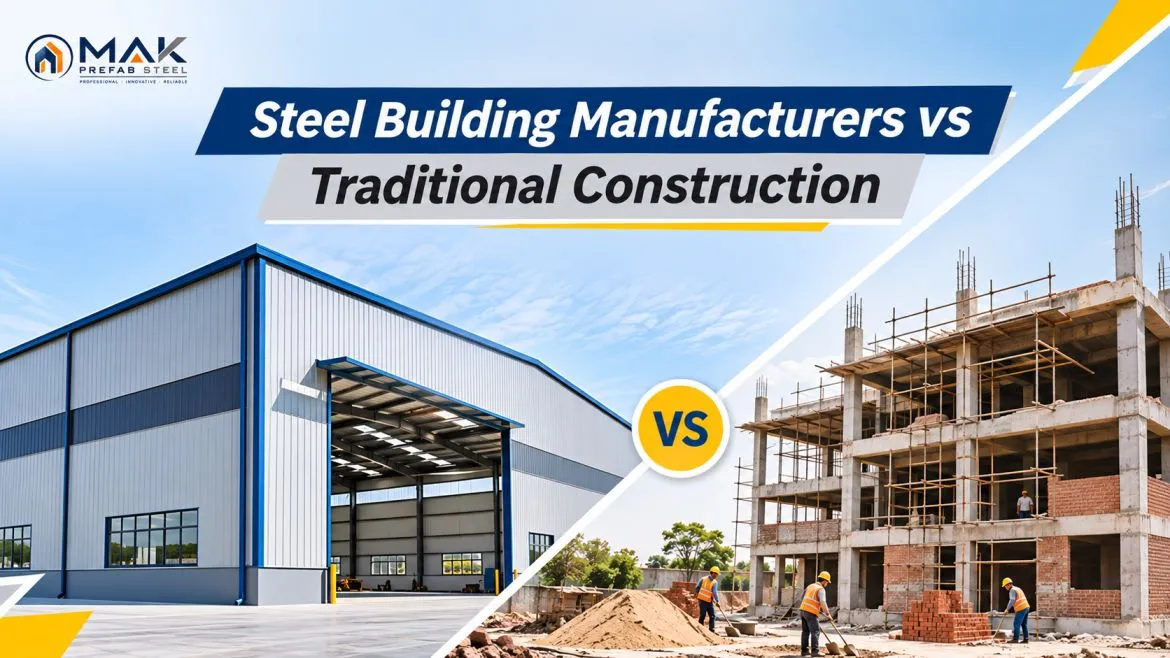
Steel Building Manufacturers vs Traditional Construction: Which Is Better?
Introduction
For businesses looking to build a warehouse, factory, shed, commercial building, or large storage area, it is crucial to choose the right construction method. While traditional construction methods have long been employed, many projects require faster and more flexible construction, which is why steel construction has become a major method of construction for many years.
The steel building manufacturers today offer engineered solutions, which combine structural strength, efficient fabrication, and faster on-site assembly. In contrast, traditional construction typically relies on concrete, bricks, masonry, and traditional construction methods.
For businesses in the UAE and other expanding markets, knowing the distinction between these methods can assist you in keeping costs in check, decreasing building time, and create lasting value. In this blog,
What Are Steel Buildings?
Steel buildings are buildings that are primarily built with steel columns, beams, frames, and other engineered parts. These parts are manufactured based on the approved design and are put together on-site.
Important stages like structural design, material selection, fabrication, quality checks, and coordination for installation are handled by professional steel building manufacturers. Steel buildings can be used for warehouses, factories, workshops, logistics centres, retail centres, and commercial buildings depending on the requirements of the project.
Prefabricated steel buildings are especially advantageous in situations where projects demand a definite construction schedule and a large open space along with a flexible layout.
What Is Traditional Construction?
A traditional construction method generally refers to the construction style of traditional construction, which relies on on-site construction, and its materials are mainly concrete, brick, block, reinforcement steel, etc. Common elements of the work involve foundation preparation, structural building, masonry, plastering and finishes.
This method can be used in residential projects, low-rise buildings, and applications that call for masonry walls, certain architectural attributes, or traditional construction methods.
Steel Building Manufacturers vs Traditional Construction: Key Differences
1. Construction Speed
One of the major advantages of steel construction is faster project execution. Site preparation and the foundation work can be carried out concurrently, provided there is coordination between the design, with steel components being fabricated in a factory.
Typical construction will have more sequential tasks, such as concrete, masonry, curing, etc. In industrial and business ventures with critical time constraints, sometimes steel construction is the better alternative to the winner.
2. Overall Construction Cost
The price of a building depends on its size, design, location, materials, foundation requirements, labour, transportation and finishing requirements.
By collaborating with seasoned metal building manufacturers, businesses can assess material quantities, fabrication needs, and installation expenses before the building process starts. Additional labour and project duration costs may also be reduced in the construction of a steel building.
However, traditional building methods can be more economical in smaller buildings or where traditional materials and locally available labour are the choice of design. When calculating just the price of the material, though, you may not get the full story. Winner for cost: Depends on the project. Make sure to consider the total installed cost and maintenance costs prior to selection.
3. Strength and Durability
Steel has a high strength-to-weight ratio, ideal for large span structures and industrial use. When the structural system, connections, foundations, and protective measures are properly designed, the steel structure building can resist large design loads. Proper design and construction of traditional reinforced-concrete buildings can yield great strength and durability as well.
There are requirements for appropriate corrosion protection of steel, particularly in moist and coastal areas. Proper detailing and protection from environmental exposure are also required for concrete structures. Winner in terms of durability: Both can function effectively when designed, built, and maintained as needed for the project.
4. Design flexibility, space utilisation
Industrial facilities typically need to have spacious areas free from obstructions, where machinery can operate, storage can be placed, goods can be produced, and vehicles can move around.
The structural design of a steel frame building can provide for wide clear spans and flexible layouts inside. Additional extensions and alterations that may need to be implemented to accommodate the future use of the building may be more easily planned when the building is initially designed.
Standard construction can provide a substantial amount of architectural flexibility, especially when the masonry layout of a building is complicated, or the concrete features are special. However, where large open spans are needed, there may be the need for further structural planning. Industrial applications like warehouses, factories, and logistics centers can benefit from steel buildings.
5. Labour and On-Site Work
The production of steel components takes place in a controlled factory environment, and therefore the quantity of structural fabrications on site is minimal. There’s still professional manpower, lifting devices, safety measures, and coordination required for installation.
Conventional building methods typically require more work on-site, such as masonry, formwork, reinforcement, and concrete pouring. Prefabricated steel construction can also minimize structural work on site, which benefits the construction of the project, but the cost of depreciation will be different depending on the complexity of the project.
6. Maintenance and Long-Term Performance
The level of maintenance varies according to the building design, environment, materials, and usage. Inspections of protective coatings, roof systems, fasteners, drainage, and connections (where appropriate) are required for steel buildings. Material selection and protective systems should be made in the UAE based on the factors of heat, humidity, dust, and coastal exposure.
Traditional buildings also need to be inspected periodically for roofs and waterproofing, concrete, paint, joints, and masonry. Both of these are non-maintenance methods. Both types of structures can have a long service life with a suitable maintenance plan.
Why Choose Professional Steel Building Manufacturers in the UAE?
When looking for steel building manufacturers in UAE, businesses should consider other factors besides cost. The right manufacturing partner can assist with engineering, fabrication, delivery, and installation requirements.
These are some things to keep in mind when choosing a supplier:
- Technical expertise – assess experience in warehouses, factories, industrial sheds, etc.
- Engineering quality: Ensure structural calculations, connections, and load requirements are properly addressed.
- Material standards: Ask about steel grades, fabrication quality, and corrosion-protection systems.
- Project coordination: Ensure coordination of responsibilities for foundations, cladding, roofing, transportation, and erection.
- Compliance: Check relevant UAE building codes/approvals and project specifications.
- After-sales support: Discuss inspection, maintenance guidance, warranties, and future expansion options.
Mak Prefab Steel supports businesses seeking practical steel construction solutions tailored to their operational and project requirements.
Which Construction Method Is Better for Your Project?
The best choice will depend on the use of the building, its budget, the building’s design, and the timeframe for completion. A steel structure is suitable for those who are looking for a warehouse, factory, industrial shed, logistics building, or large-span commercial building that requires efficient assembly and future expansion.
If your project involves lots of masonry work, conventional architecture, specialized concrete elements, or the design is most effectively achieved using traditional construction, consider traditional construction.
In certain projects, a hybrid solution with steel framing and concrete floors or masonry walls or other traditional elements might be the most appropriate approach.
Frequently Asked Questions (FAQs)
1. Are steel buildings better than traditional construction?
Steel buildings can be better for warehouses, factories, and large-span commercial projects. Traditional construction may be more suitable for certain residential and masonry-based designs.
2. Are prefabricated steel buildings durable?
Yes. Properly engineered steel buildings with suitable corrosion protection, quality fabrication, and regular maintenance can provide long-term durability.
3. How long does Mak Prefab Steel take to complete a steel building project?
The timeline depends on project size, design complexity, approvals, foundation preparation, fabrication, and installation. Coordinating fabrication with site preparation can help improve overall project efficiency.
4. What are steel structure buildings used for?
They are commonly used for warehouses, factories, workshops, industrial sheds, distribution centres, commercial facilities, and other buildings requiring engineered steel framing.
5. How do I choose reliable metal building manufacturers?
Review their project experience, engineering capabilities, material specifications, quality-control processes, installation scope, safety practices, and customer references.
6. What types of steel structure buildings does Mak Prefab Steel provide?
Mak Prefab Steel offers steel building solutions for applications such as industrial warehouses, manufacturing plants, workshops, logistics centres, storage facilities, and commercial buildings, depending on project requirements.